
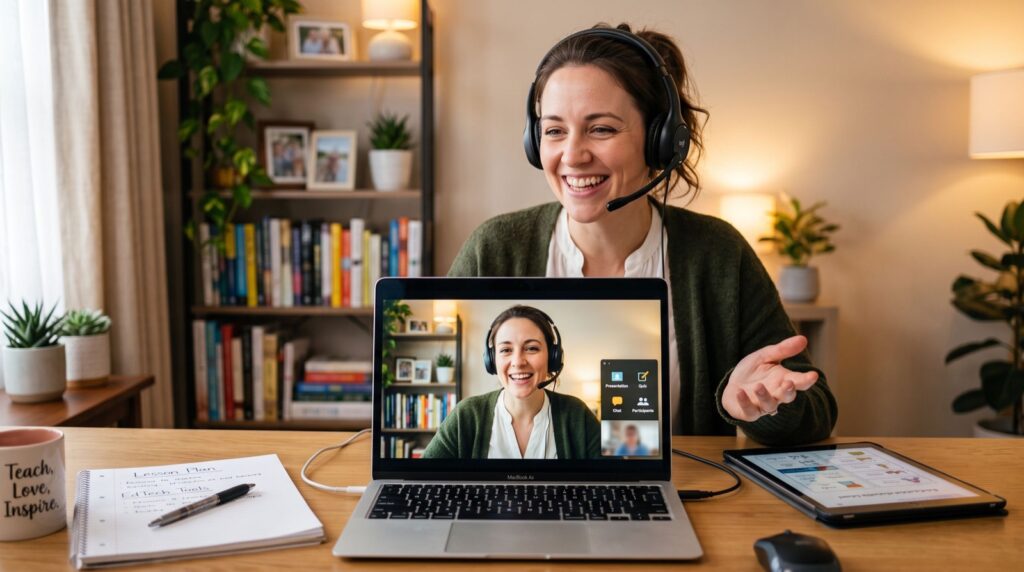
Ask any parent in 2026 how their child studies after school, and you will hear a very different answer than you would have a decade ago. Instead of driving across the city to an academy, families are logging into a video call, sharing a whiteboard, and getting help within minutes. Understanding how online tutoring actually works, from the first session to steady progress, is the best way to decide whether it fits your child. This guide walks through the mechanics honestly, based on what genuinely helps students improve.
I have sat in on hundreds of these sessions, and the pattern is clear: the technology matters far less than the structure around it. A good online tutor turns a screen into a focused, one-to-one classroom. A weak one just reads slides aloud. Knowing the difference protects your time and money.
How online tutoring works, step by step
The process is simpler than most people expect. There is no complicated software to master and no long setup. A tutor and student meet on a scheduled video call, work through material together in real time, and leave with a clear plan for the next session.
Here is the typical flow a family experiences:
- You share the student’s grade, subjects, and current struggles during a short intake chat.
- The service matches the student with a tutor who specialises in that subject and board.
- The tutor runs a brief diagnostic in the first session to find real gaps.
- Each lesson uses a shared screen or digital whiteboard to solve problems live.
- The student gets homework, notes, and a summary to review before the next class.
Because everything is scheduled and recorded in notes, parents can see exactly what was covered. That transparency is one reason demand for qualified online tutors in Islamabad has grown so quickly among families balancing busy routines.
What you actually need to get started
The equipment list is short and affordable. Most students already own everything required.
- A laptop, tablet, or even a mid-range smartphone with a camera.
- A stable internet connection of a few megabits per second.
- A quiet corner and, ideally, a headset to cut background noise.
- A notebook or a stylus app for working through problems by hand.
Why does online tutoring often beat a crowded classroom?
The advantage is attention. In a class of forty, a shy student can go a whole term without asking a single question. In a one-to-one session, there is nowhere to hide, and that is a good thing. The tutor notices confusion the moment it appears and adjusts on the spot.
Research backs this up. A widely cited education study summarised by the Bill and Melinda Gates Foundation found that high-dosage, individualised tutoring is among the most effective interventions for accelerating student learning. The personal feedback loop is what makes the difference, not the venue.
Comparing online tutoring with traditional academies
Both models can work, but they suit different needs. This quick comparison helps you weigh the trade-offs for your own situation in 2026.
| Factor | Online one-to-one tutoring | Physical group academy |
|---|---|---|
| Attention per student | Fully individual | Split among the class |
| Travel time | None | Often 30–60 minutes |
| Scheduling | Flexible, evenings and weekends | Fixed batch timings |
| Pace | Matched to the student | Set for the group average |
| Session records | Notes and recordings available | Rarely provided |
Making each session count
The families who see the fastest results treat online tutoring as a partnership rather than a delivery service. A tutor supplies expertise, but the student still has to show up prepared and willing to work.
My most practical tip is to end every session by having the student explain one concept back in their own words. This simple habit, called retrieval practice, locks the learning in far better than passively nodding along. Ask your tutor to build it into the routine.
It also helps to keep goals concrete. Instead of a vague aim like improving in maths, target a specific chapter or an upcoming test. Structured online courses that map to your child’s syllabus make this easy, because progress is measured against real milestones rather than a fuzzy sense of feeling better.
Staying consistent between lessons
Momentum matters. A short daily review of thirty minutes beats a frantic weekend marathon every time. Encourage your child to revisit the tutor’s notes the same evening, while the explanation is still fresh.
When you are choosing a service, look for the same qualities you would want in any reliable partner. Just as you would only hire dependable specialists for a job at home, you want tutors who are qualified, punctual, and genuinely invested in the outcome.
Common myths that hold families back
A few stubborn misconceptions still keep parents from trying online tutoring, and most of them simply do not hold up. The first is that young children cannot focus on a screen. In practice, a skilled tutor keeps a child engaged with interactive tasks far more effectively than a lecture ever could.
The second myth is that online means impersonal. The opposite is usually true. Sitting one-to-one with a patient tutor who remembers your child’s name, weaknesses, and small wins is deeply personal, often more so than being one face in a crowded room.
A third worry is technical breakdowns. Yes, the occasional connection hiccup happens, but modern platforms are robust, and a quick reconnect rarely derails a lesson. Weigh that minor risk against the hours of travel you save every single week.
How to measure real progress
Feeling better about a subject is a start, but you want evidence. Set a simple baseline at the beginning, such as a diagnostic test score, then review it every few weeks. Concrete markers keep everyone honest and motivated.
Ask your tutor for short monthly summaries covering what was mastered, what still needs work, and the plan ahead. This turns a vague sense of improvement into a clear, trackable trajectory that justifies the investment.
Frequently Asked Questions
Is online tutoring as effective as in-person tutoring?
For most students, yes. The core benefit of tutoring is individual attention and immediate feedback, and both transfer fully to a well-run video session. Many students actually focus better at home without the distraction of a large group.
What subjects can be taught online?
Almost all of them. Maths, science, English, and language subjects work especially well with a shared whiteboard, and specialist areas like Quran learning or O and A Level prep are commonly offered too.
How long should an online tutoring session last?
Sixty minutes is the sweet spot for most school-age students. It is long enough to make real progress but short enough to hold concentration. Younger children may do better with 45-minute sessions.
How soon will I see results?
Confidence often improves within the first few weeks, while grade changes usually appear over a term of consistent, focused sessions. Steady attendance matters far more than occasional cramming.
The bottom line
Online tutoring works because it strips learning back to what matters most: a knowledgeable guide giving one student their full attention. In 2026, the tools are cheap, the flexibility is real, and the results are well documented. If your child is falling behind or aiming higher, connecting with the right online tutors is one of the most practical decisions you can make, and it starts with a single, low-pressure first session.